- English
- Italiano
- Español
- Français


A Traders' Playbook: Trading Trump’s Ultimatum – Oil, Rates and Rising Market Stress

Summary
• Markets enter a high-risk week with elevated volatility and deepening equity drawdowns
• Trump’s ultimatum on the Strait of Hormuz is the key macro catalyst into Tuesday
• Crude oil remains the dominant driver of cross-asset price action
• Equity internals show broad-based weakness with limited defensive hiding spots
• Bond yields are rising sharply, pressuring valuations and tightening financial conditions
• Interest rate expectations have flipped, with markets now pricing potential central bank hikes
• A supply-driven inflation shock is creating a toxic mix for risk assets • Volatility likely stays supported as traders hedge binary geopolitical outcomes
Market setup: A pivotal week for risk assets
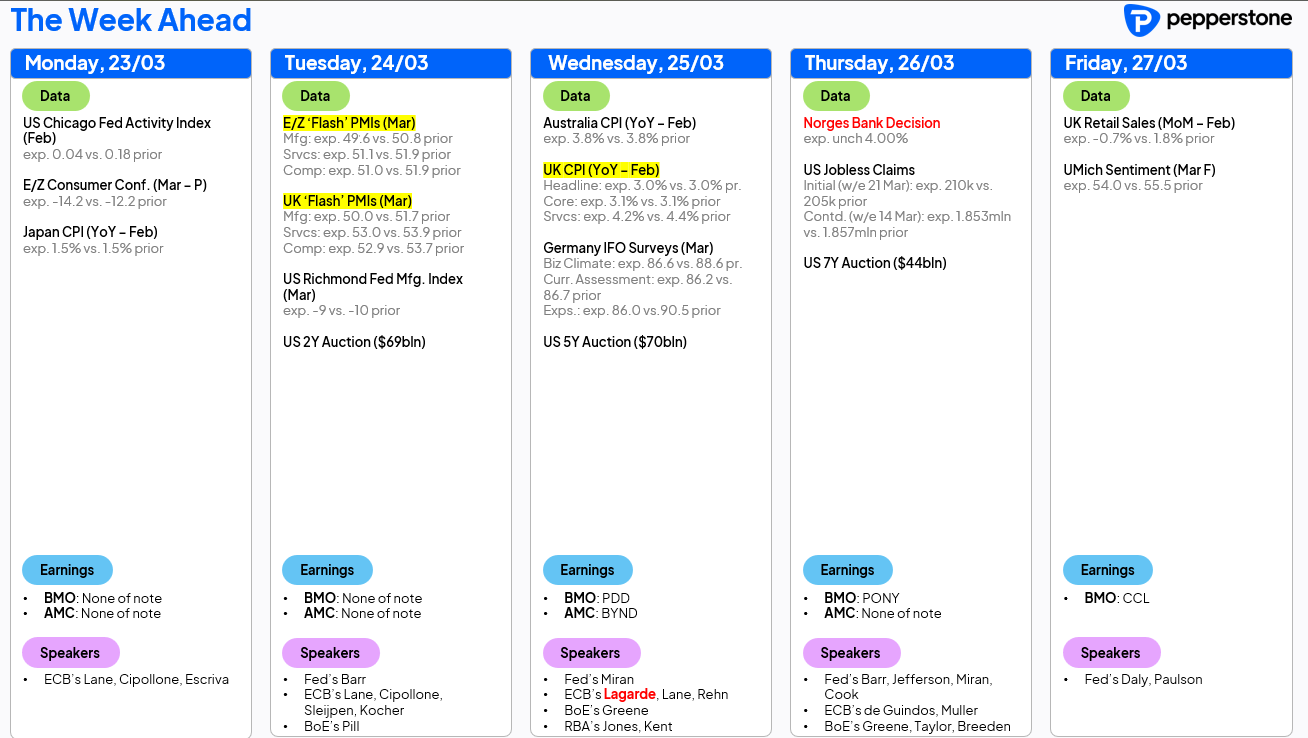
We roll into what could be a defining week for global markets. The backdrop is fragile, with investor nerves frayed, implied cross-asset volatility elevated, and equity drawdowns increasingly pronounced. In several major indices, price action resembles a classic falling knife environment, where confidence is low and conviction even lower.
Geopolitical risk: The Iran ultimatum takes centre stage
Trump’s ultimatum for Iran to reopen logistical channels through the Strait of Hormuz is the dominant macro driver. Markets are actively reassessing exposures and hedges into what appears to be a firm and actionable deadline.
Early price action reflects a cautious tone. Crude is up 0.8%, S&P 500 futures are down 0.4%, and the AUD is underperforming. The relatively contained moves suggest positioning remains measured, but the event risk is clearly front of mind. If the deadline passes without resolution, focus will quickly shift to the scale of any US response and the nature of Iran’s countermeasures, particularly toward US bases and regional allies. This sets up a binary macro outcome with potentially significant implications into month and quarter end.
Oil markets: Crude remains the key transmission channel
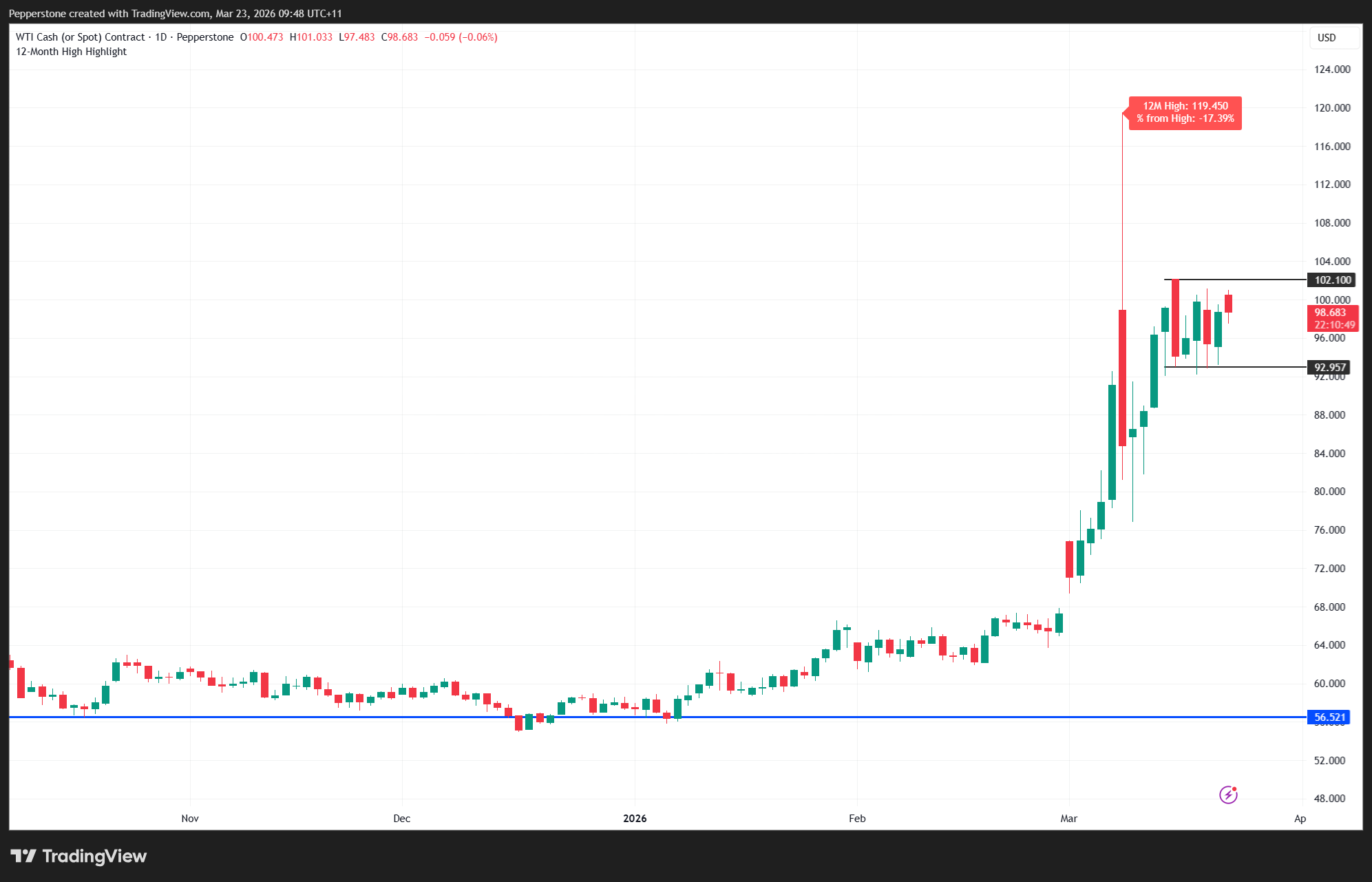
Crude oil continues to dictate cross-asset flows. WTI futures have traded within a $92 to $102 range over the past six sessions, and a decisive upside break on a closing basis would open a move back toward the 9 March highs.
Brent crude has shown relative strength, printing a series of higher lows. While implied volatility has eased from extreme levels, it could rebuild quickly as traders hedge into the geopolitical deadline. Oil remains the clearest expression of geopolitical risk, and its direction will likely continue to drive inflation expectations, FX flows and equity sentiment.
Equities: Weak internals and limited support
Equity markets remain under sustained pressure. European indices have traded heavily, and the ASX 200 is breaking through key technical levels.
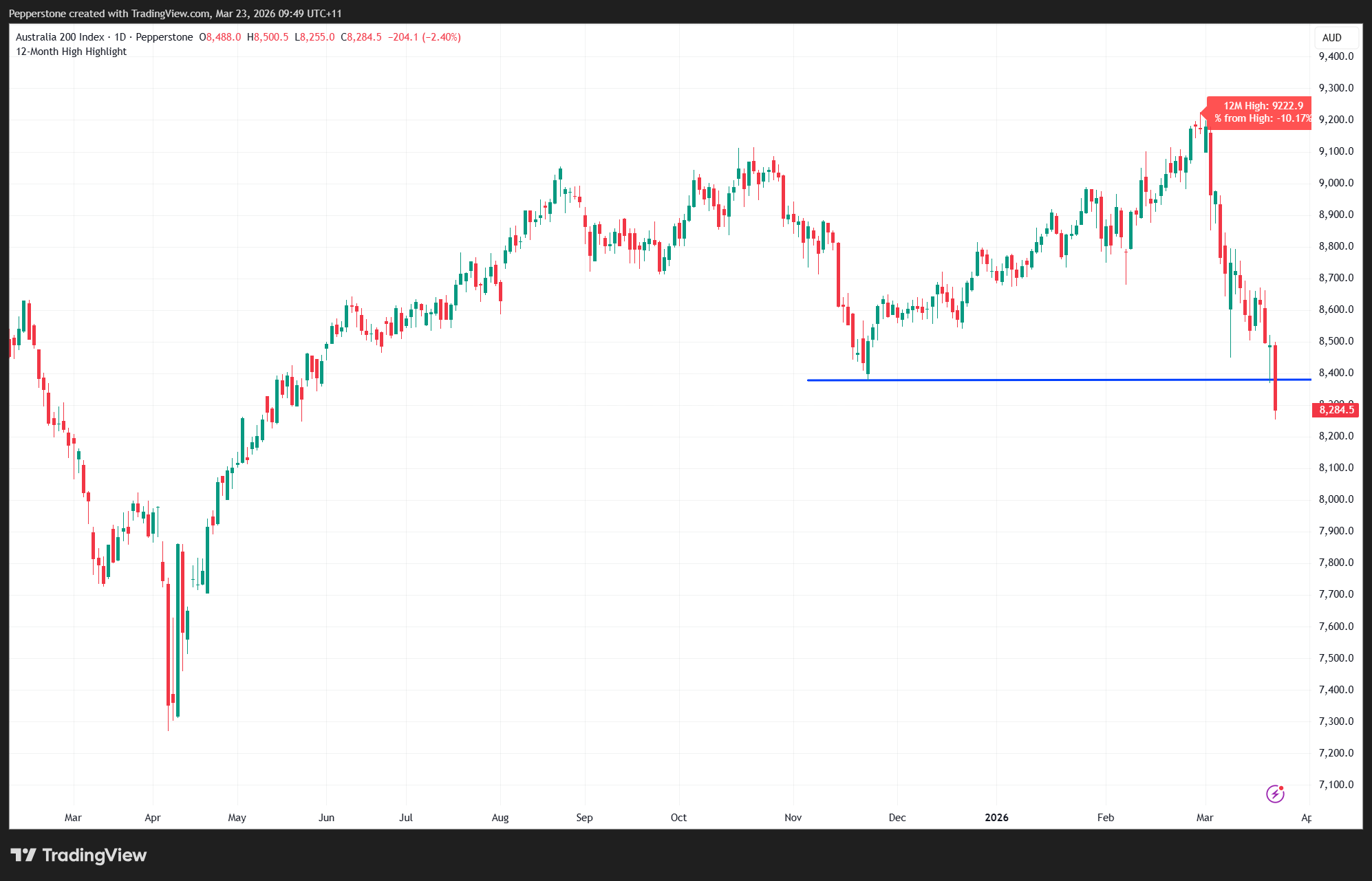
Market internals paint a concerning picture. Around 66% of ASX 200 stocks are trading below their 200-day moving average, 79% are below their 50-day moving average, and 39% closed Friday at four-week lows. This breadth deterioration highlights widespread participation in the sell-off and limited areas for defensive positioning.
Interest rates and inflation: A sharp repricing of expectations
The macro environment is becoming increasingly challenging. Higher front-end yields and a broader sell-off across the curve are weighing on duration-sensitive equities, as rising discount rates compress valuations.
At the same time, short-term inflation expectations are being repriced aggressively higher, with one- and two-year inflation swaps moving sharply in line with crude.
In the US, interest rate swap pricing has shifted materially. The implied yield for the December FOMC meeting rose 32bp over the past week, with markets now leaning toward the possibility that the next move from the Fed could be a hike.
This repricing is global. UK markets are assigning a small probability to three Bank of England hikes over the next three meetings. The ECB is pricing around 55 basis points of tightening by July and close to three hikes by year end. In Australia, swaps imply the RBA could deliver up to four hikes by December, taking the cash rate above 5%.
The macro risk: A toxic mix for markets
This repricing appears increasingly emotional and driven by a right-tail, supply-led shock. History shows that hiking into a supply shock rarely ends well for risk assets.
Markets are now facing a difficult combination of rising short-term inflation expectations, a sharp sell-off in both nominal and real yields, and tightening expectations driven not by stronger growth, but by higher energy prices and geopolitical risk.
Volatility and positioning: Managing binary outcomes
There remains very limited visibility on what could trigger a credible de-escalation. This lack of clarity should keep volatility well supported as a hedge against uncertainty.
With a binary event risk into Tuesday’s ultimatum, the near-term trading environment is highly susceptible to positioning flows, as participants adjust exposures to manage potential outcomes.
Good luck to all.
The material provided here has not been prepared in accordance with legal requirements designed to promote the independence of investment research and as such is considered to be a marketing communication. Whilst it is not subject to any prohibition on dealing ahead of the dissemination of investment research we will not seek to take any advantage before providing it to our clients. Pepperstone doesn’t represent that the material provided here is accurate, current or complete, and therefore shouldn’t be relied upon as such. The information, whether from a third party or not, isn’t to be considered as a recommendation; or an offer to buy or sell; or the solicitation of an offer to buy or sell any security, financial product or instrument; or to participate in any particular trading strategy. It does not take into account readers’ financial situation or investment objectives. We advise any readers of this content to seek their own advice. Without the approval of Pepperstone, reproduction or redistribution of this information isn’t permitted.