• Home
  • Pro
  • Partners
  • Help and support
  • English
  • 简体中文
  • 繁体中文
  • ไทย
  • Tiếng Việt
  • Español
  • Português
  • لغة عربية
Pepperstone logo
Pepperstone logo
  • Ways to trade
    • CFD trading

      Trade price movements with competitive spreads

    • Premium clients

      Exclusive rewards and bespoke benefits for high-vol traders

    • Pricing

      Discover our tight spreads, plus all other possible fees

    • Professional

      Access exclusive features like higher leverage, cash rebates and premium rewards.

    • Trading accounts
    • Active trader program
    • Demo trading
    • Refer a friend
    • Trading hours
    • 24-hour trading
    • Maintenance
    • Risk management
  • Markets
    • Forex CFDs

      Get great rates on majors like EUR/USD, plus minors and exotics

    • Commodity CFDs

      Trade on metals, energies and softs, with spreads from 2 cents on oil

    • Cryptocurrency CFDs

      Speculate on Bitcoin, Ether and more, with a trusted broker

    • Shares CFDs
    • ETF CFDs
    • Index CFDs
    • Currency Index CFD
    • Dividends for index CFDs
    • Dividends for share CFDs
    • CFD forwards
  • Trading platforms
    • TradingView

      Trade through the world-famous supercharts with great pricing

    • MetaTrader 5

      Explore the apex in trading automation with our execution tech

    • The Pepperstone platform
    • MetaTrader 4
    • CopyTrading
    • cTrader
    • Trading tools
  • Market analysis
    • Navigating markets

      Latest news and analysis from our experts

    • Meet the analysts

      Our global team giving your trading the edge

  • Learn
    • Trading guides

      Trading guides & educational materials

    • Webinars

      Grow your knowledge

  • About us
    • Who we are

      Pepperstone was born from the dream of making trading better

    • Pepperstone reviews
    • Press releases
    • Company awards
    • Protecting clients online
    • CFD trading

      Trade price movements with competitive spreads

    • Premium clients

      Exclusive rewards and bespoke benefits for high-vol traders

    • Pricing

      Discover our tight spreads, plus all other possible fees

    • Professional

      Access exclusive features like higher leverage, cash rebates and premium rewards.

    • Trading accounts
    • Active trader program
    • Demo trading
    • Refer a friend
    • Trading hours
    • 24-hour trading
    • Maintenance
    • Risk management
    • Forex CFDs

      Get great rates on majors like EUR/USD, plus minors and exotics

    • Commodity CFDs

      Trade on metals, energies and softs, with spreads from 2 cents on oil

    • Cryptocurrency CFDs

      Speculate on Bitcoin, Ether and more, with a trusted broker

    • Shares CFDs
    • ETF CFDs
    • Index CFDs
    • Currency Index CFD
    • Dividends for index CFDs
    • Dividends for share CFDs
    • CFD forwards
    • TradingView

      Trade through the world-famous supercharts with great pricing

    • MetaTrader 5

      Explore the apex in trading automation with our execution tech

    • The Pepperstone platform
    • MetaTrader 4
    • CopyTrading
    • cTrader
    • Trading tools
    • Navigating markets

      Latest news and analysis from our experts

    • Meet the analysts

      Our global team giving your trading the edge

    • Trading guides

      Trading guides & educational materials

    • Webinars

      Grow your knowledge

    • Who we are

      Pepperstone was born from the dream of making trading better

    • Pepperstone reviews
    • Press releases
    • Company awards
    • Protecting clients online
Share
Beginner

What is Bitcoin?

You may have heard of this fascinating cryptocurrency given its recent prominence in the media. But what is it and how does it actually work? Read below to find out more about Bitcoin.
bitcoin.jpg

Bitcoin is the world’s first decentralized, digital currency. Created in 2009 by an elusive computer programmer under the pseudonym ‘Satoshi Nakamoto’, it uses blockchain technology to create a distributed ledger which cannot be manipulated by any one person, company or government. The ledger utilises cryptography to create and eternalise records pertaining to the creation and transfer of Bitcoin, so it can never be duplicated or double-spent, and can never be transferred without confirmation from the Bitcoin owner and the majority of the network.

While originally intended to be used as a means of exchange, Bitcoin is now very commonly used as a speculative investment asset by both those who have a vested interest in the use of Bitcoin and blockchain technology, as well as investors who are simply looking for significant returns on an asset that is being quickly adopted by people, countries and governments all around the world.

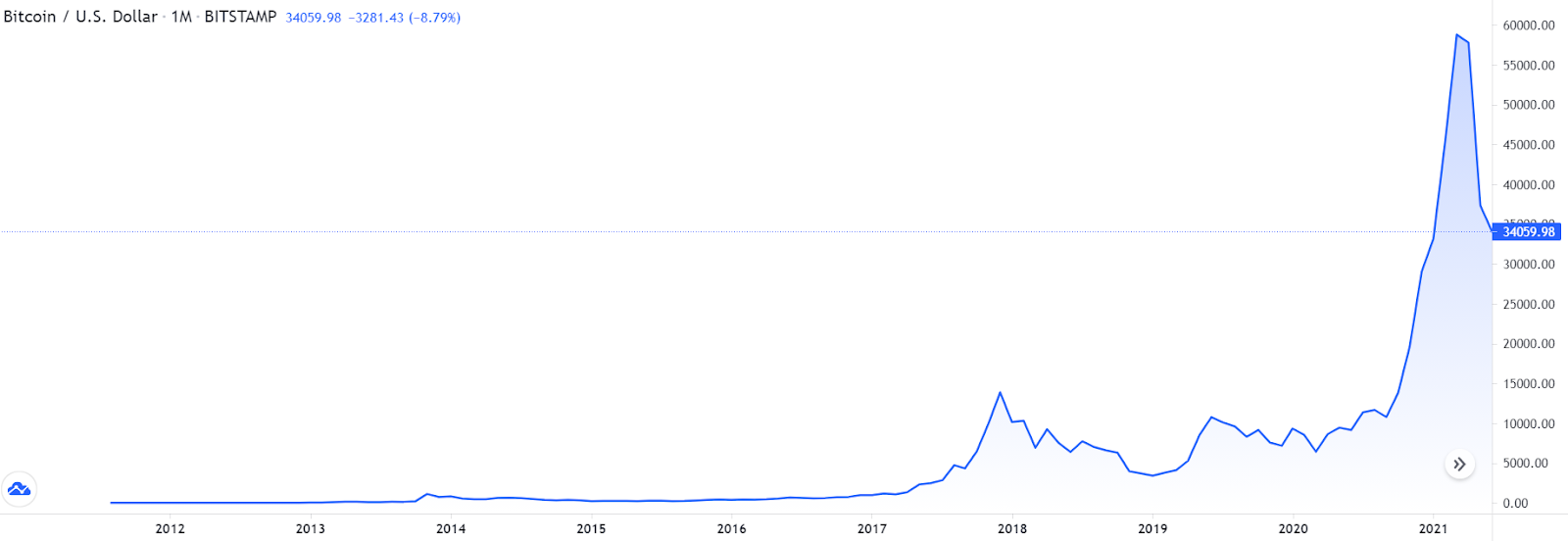
Its meteoric rise ‘to the moon’ as many crypto fans would say, from as little as ~$100 in 2013 to as much as ~$65,000 in 2021, has made it one of the most talked about topics in financial markets in recent history. FOMO ( the fear of missing out) from investors has played a key part in Bitcoin’s rapid rise in popularity, and this has fueled significant increases in its valuation particularly over the past couple of years. But the initial reluctance of investment banks, hedge funds and other major players to get involved is also starting to subside, and so the future prospects of Bitcoin are constantly evolving as wider market sentiment changes.
tradingview_bitcoin_rise.png

With the allure of currency speculation in mind, Bitcoin is also an exciting vehicle for short term traders of all timeframes. Cryptocurrencies markets are open 24/7, 365 days a year. That means opportunities for traders every day of the week, all year round.

Being completely decentralized, it could be argued that Bitcoin and other cryptocurrencies could one day be the technical trader’s most prized asset class, since no one entity can control its use or price and because it is free from government intervention. But while certain influential people (cough* Elon Musk) and governments (cough* China) manage to cause sudden and severe changes in its price with ease, this is still yet to be seen.

What there is no doubt about, however, is the sheer volatility and therefore opportunity in Bitcoin that should appeal to all traders. With consistent moves of 3-5% up and down, practically every day, and regular expansions or corrections of 10% or more in mere days and even hours, Bitcoin is quickly becoming an instrument of choice for traders.

Why was Bitcoin created?

Security of payment

A primary goal of Bitcoin was to provide a method of payment that was safe and secure, leveraging cryptography to encrypt and safeguard ownership of the coins and to prevent manipulation of the distributed ledger.

Removal of centralised authorities

In response to the Global Financial Crisis of 2008, Satoshi Nakamoto looked to create a means of exchange that completely removed financial intermediaries (banks and financial institutions), centralised authorities and regulators from involvement in financial transactions. The dream was a world where control was in the hands of the people, not governments or corporate powers, and the middle man was no more.

Reduce cost of financial transactions

Another one of Bitcoin's aims was to greatly reduce the cost of financial transactions and radically improve the speed at which financial transactions and transfers were made.

What is the Blockchain?

The blockchain is essentially record-keeping technology, a database, that is used to create and record transactions into a distributed ledger using blocks of data that link together in a form of virtual data-chain. It is key to the implementation and success of Bitcoin. Where databases and ledgers previously needed to be housed in a central location (server) and were owned and maintained by a single entity, blockchain technology uses thousands of different computers and servers, owned by various unrelated entities, and spread across many different geographical locations to store and confirm the accuracy of its data.
crypto-hardware.jpg

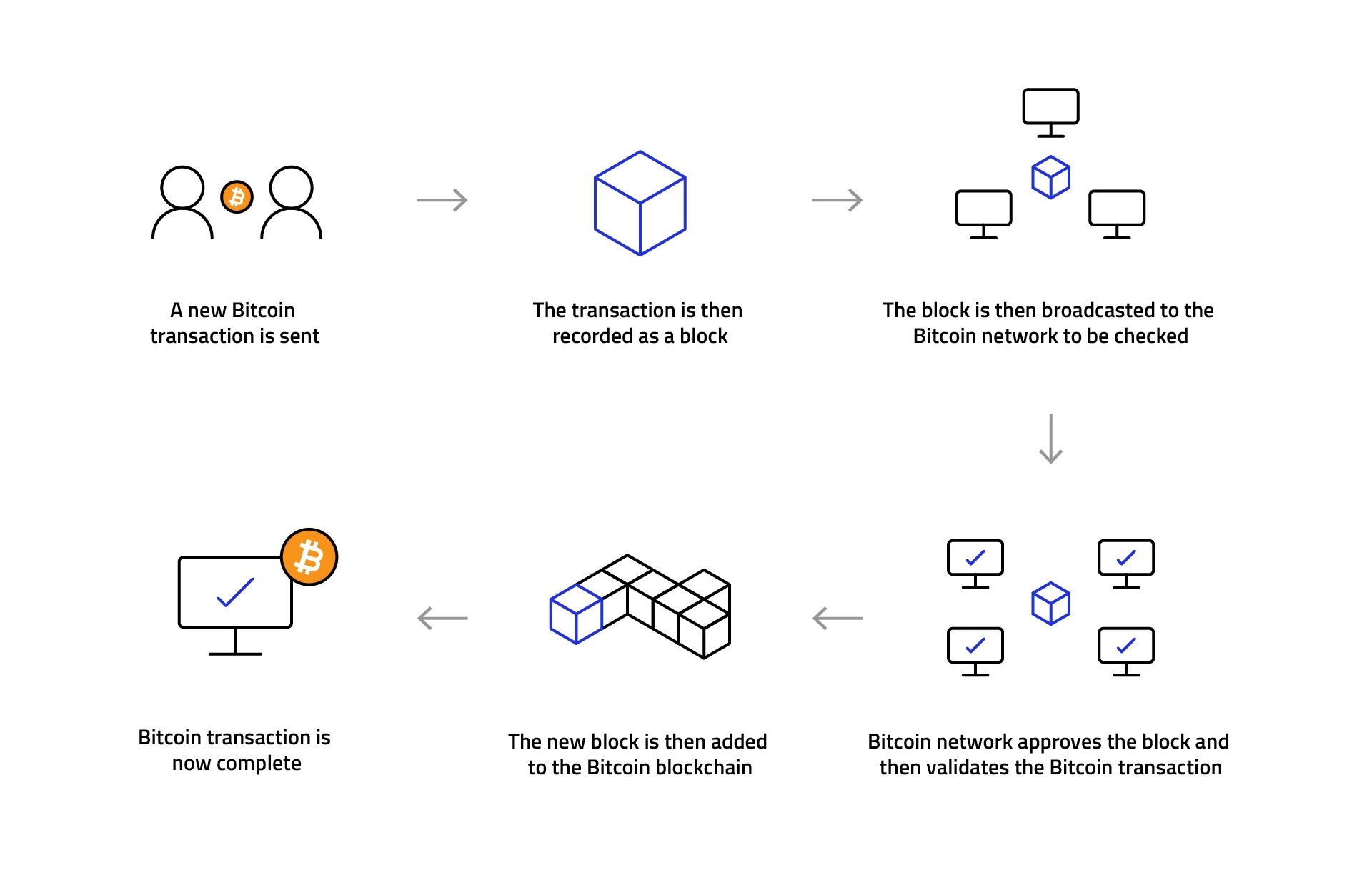
In the case of Bitcoin, the data being created and stored is information about the creation and transfer of Bitcoins. Think timestamps, buyer and seller IDs and quantities. The numerous computer systems that communicate with each other, referred to as “nodes,” compile new data about Bitcoin transactions and store it as a block until its capacity is full. The more nodes there are, the greater the security of the network becomes.

Through a process known as “proof of work,” one node (the prover) works to solve an arbitrary mathematical puzzle (called the hash), and upon completion the rest of the nodes in the network work to verify the result. Once a majority of nodes (51%) in the network have successfully verified the hash, the new block is then created and chained to the previous block in chronological order.

In this way, the data contained in the block can never be corrupted or manipulated, since nodes housing contrary information in the blockchain would be cross-referenced against the majority which contain correct information. These rogue nodes would then simply be thrown out of the network as they cannot reconcile with the majority sources of truth.
bitcoin-blockchain-transaction-2.jpg

The only way for changes to be made to a blockchain is for the majority of nodes in the network to come to consensus on a particular change. For this reason, making changes to the blockchain becomes infeasible for any one entity or even a group of entities, given the sheer power consumption, technical capabilities and finances required to operate 51% of the Bitcoin network.

What is Bitcoin mining, and what role do Bitcoin miners play?

Bitcoin mining

Bitcoin mining is the process of verifying transactions in the blocks that make up the blockchain. A full block contains 1MB of bitcoin transactions. For verifying transactions in the blockchain, Bitcoin miners go into a lottery to solve a mathematical problem which generates an output known as a “hash.” The node or miner that finds the correct hash then gets their proposed block added to the blockchain, and is rewarded for this in newly minted Bitcoin. This is how new Bitcoins are added to circulation.

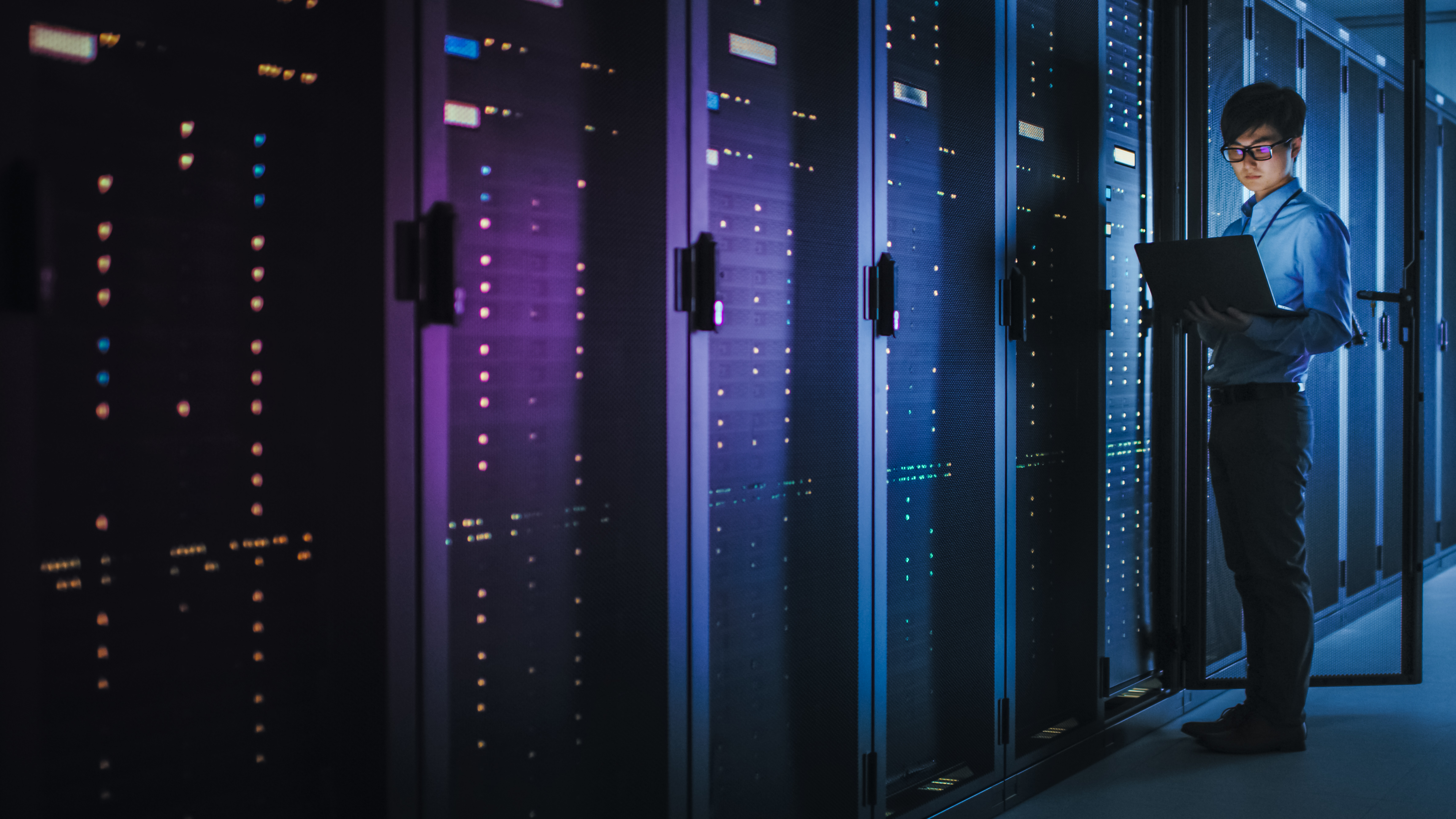
As more bitcoins are mined and as the nodes in the network increase, the difficulty of any one node computing the correct hash increases exponentially. In order for miners to increase their chances of computing the correct hash, sophisticated computer and hardware setups which use significant amounts of energy are required.

Bitcoin miners

Bitcoin miners are the people and organisations who set up complex computer systems in order to verify transactions on the blockchain. Known as “mining rigs”, they contain high powered computer chips and hardware that solves the mathematical equations required in cryptography. 

For their efforts in verifying bitcoin transactions, adding blocks to the block chain, and supporting the smooth functioning of the Bitcoin network, miners are rewarded in Bitcoin. Bitcoin miners are the key to the effectiveness of blockchain, eliminating the double-spend issue which would be apparent otherwise.

What are the main drivers of Bitcoin?

Demand & supply

Overall interest and demand for Bitcoin plays a key role in determining its value. The limitation of 21 million coins that can be minted means supply will always be limited. Demand is often driven by a combination of FOMO and news flow.

Bitcoin adoption

As more people, companies and even governments start to use Bitcoin as a means of exchange and legal tender, continuation of its upward trajectory is likely to result.

Government restrictions

Centralised authorities are largely hesitant to accept Bitcoin or cryptos in general as viable means of exchange. Many believe this to be motivated by the desire to maintain control over their respective currencies and taxation. Where governments place restrictions on, or all-out ban Bitcoin and cryptos, prices tend to decline in the short term.

Influential people

Popular media, business and entertainment personalities can have a significant influence on the short term price of Bitcoin and other coins. Tweets, statements and tv appearances from these celebrities in the crypto community can cause fast price action without notice.

Technical levels

Plenty of professional traders will trade Bitcoin just as they do any other currency or asset. Significant price levels and technical indicators, in the absence of unexpected news, often play a key role in determining supply and demand at present valuations.

You can learn more about technical analysis here.

How can I trade Bitcoin?

You can read about the different methods to trade Bitcoin here, or you can sign up for an account today to trade Bitcoin CFDs.

Pepperstone doesn’t represent that the material provided here is accurate, current or complete, and therefore shouldn’t be relied upon as such. The information provided here, whether from a third party or not, isn’t to be considered as a recommendation; or an offer to buy or sell; or the solicitation of an offer to buy or sell any security, financial product or instrument; or to participate in any particular trading strategy. We advise any readers of this content to seek their own advice. Without the approval of Pepperstone, reproduction or redistribution of this information isn’t permitted.

Other sites

  • The Trade Off
  • Partners
  • Group
  • Careers

Ways to trade

  • Pricing
  • Trading accounts
  • Pro
  • Active trader program
  • Refer a friend
  • Trading hours

Platforms

  • Trading platforms
  • TradingView
  • MT5
  • MT4
  • cTrader
  • Copy trading
  • Trading tools

Markets & Symbols

  • Forex
  • Shares
  • ETFs
  • Indices
  • Commodities
  • Currency indices
  • Cryptocurrencies
  • CFD forwards

Insights

  • Navigating markets
  • Meet the analysts
  • Trading guides
  • Videos
  • Webinars

About

  • Press releases
Pepperstone logo
support@pepperstone.com
1786 628 1209
#1 Pineapple House,
Old Fort Bay, Nassau,
New Providence, The Bahamas
  • Legal documents
  • Privacy policy
  • Website terms and conditions
  • Cookie policy
  • Sitemap

© 2025 Pepperstone Markets Limited | Company registration number 177174 B | SIA-F217

Risk Warning: CFDs are complex instruments and come with a high risk of losing money rapidly due to leverage.

80.1% of retail investor accounts lose money when trading CFDs with this provider.

You should consider whether you understand how CFDs work, and whether you can afford to take the high risk of losing your money.

You don't own or have rights in the underlying assets. Past performance is no indication of future performance and tax laws are subject to change. The information on this website is general in nature and doesn't take into account your or your client's personal objectives, financial circumstances, or needs. Please read our RDN and other legal documents and ensure you fully understand the risks before you make any trading decisions. We encourage you to seek independent advice.

Pepperstone Markets Limited is located at #1 Pineapple House, Old Fort Bay, Nassau, New Providence, The Bahamas and is licensed and regulated by The Securities Commission of The Bahamas,( SIA-F217).

The information on this site and the products and services offered are not intended for distribution to any person in any country or jurisdiction where such distribution or use would be contrary to local law or regulation.